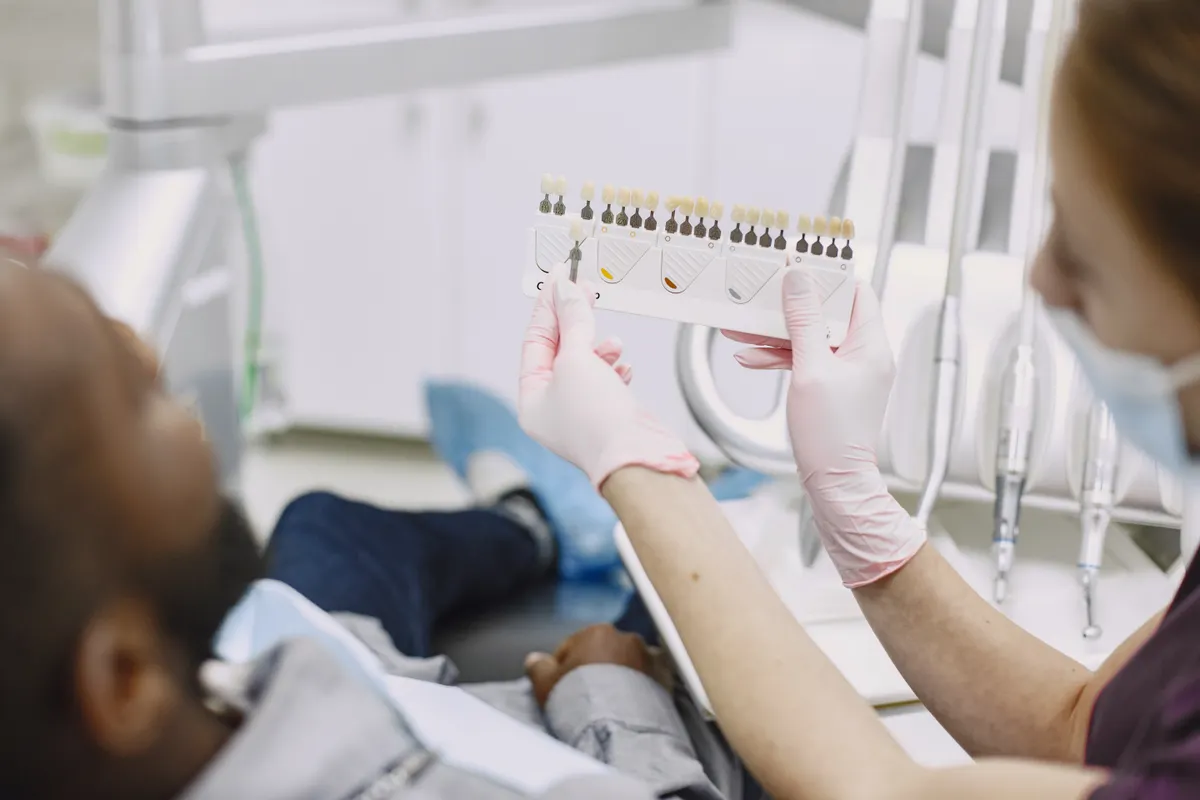
Professional teeth whitening and over-the-counter strips can both lighten some stains. In-office treatment may work more quickly, while strips usually cost less. A dentist in Boca Raton can explain which options are suitable for your teeth.
Let’s talk about which one might work best for you and whether either one is safe for your teeth.
Why Do Teeth Get Yellow or Stained?
Teeth change color over time. It happens to almost everyone. But do you know why?
Stains come from things we eat, drink, or do every day. Some stains sit on top of your teeth. Other stains go deep inside.
Stains on the Outside
These are easy to spot and happen from:
- Coffee and tea (very common)
- Red wine
- Smoking
- Dark berries
- Soy sauce and dark foods
Stains on the Inside
These are harder to fix and come from:
- Getting older (it’s natural)
- Taking certain medicines
- Too much fluoride when you were a kid
- A tooth that got bumped or hurt
Surface stains are often easier to address. Some internal discoloration may respond differently or need another type of treatment. Ask a dentist what is causing the stain before choosing a product.
How Does a Dentist Whiten Your Teeth?
If you want teeth whitening in Boca Raton, you can visit a dental office and get it done by a professional. A dentist can look at your teeth first and tell you what will work best for you.
Here’s What Happens at the Dentist
- Your dentist examines your teeth and gums before recommending whitening.
- They put a special shield on your gums to keep them safe.
- They apply a whitening gel. In-office products often use a higher concentration than over-the-counter strips.
- Some whitening systems use a light. The method depends on the product.
- The dentist follows the timing for the whitening system used.
- They wash it all off.
- They might do it one or two more times in the same visit.
Some patients notice a change after one visit. Results depend on the stain and the whitening system.
Why Is the Dentist’s Way So Strong?
Dentists can select a product and protect your gums during in-office treatment. A dentist may also provide custom trays for at-home whitening. Tooth sensitivity and gum irritation are still possible.
How Do Whitening Strips Work?
Whitening strips are small, sticky pieces you can get at any drugstore. You put them on your teeth yourself at home and do it alone.
Here’s How You Use Strips
- Read the product instructions before applying the strips.
- Peel the strip off the package.
- Stick it on your top teeth.
- Stick another strip on your bottom teeth.
- Leave the strips on for the time specified on the package.
- Remove the strips as directed.
- Follow the product’s schedule and do not use more than directed.
The time needed to see a change depends on the product and the type of stain.
Why Are Strips Weaker?
Over-the-counter products usually contain a lower concentration of bleaching agent than in-office treatments. Strip fit can affect coverage and may irritate the gums.
Comparing Them Side by Side
Here is what you should know:
| What to Know | Dentist Whitening | Store Strips |
|---|---|---|
| How Strong | Often higher concentration | Usually lower concentration |
| How Fast | Some results may be visible after one visit | Depends on the product and schedule |
| How Long It Stays White | Varies with the stain and habits | Varies with the product and habits |
| How Much It Costs | Ask for a written estimate | Varies by product |
| Is Your Gum Safe | The dentist uses a gum barrier or protective gel | Gum irritation is possible |
| Is Your Tooth Safe | Sensitivity is possible | Follow the label. Sensitivity is possible. |
| Best For | Really stained teeth, quick results | Light stains save money. |
Is One Safer for Your Teeth?
Tooth enamel is the outer layer of the tooth. Whitening can cause temporary sensitivity or gum irritation. The right option depends on your oral health and how the product is used.
What a Dentist Checks Before Whitening
A dentist checks for cavities, gum problems and reasons a stain may respond poorly to whitening. During in-office treatment, the team uses a protective barrier or gel to limit contact with the gums.
Use Strips as Directed
Do not leave them on longer than the box says. Do not use them too many times. Stop if your teeth hurt or your gums look red. Talk to a dentist before using strips if you have cavities or gum problems.
Money and Time: What Works for You?
Compare the price, number of appointments or applications, and likely results before deciding.
Ask about the total cost and whether touch-ups may be needed.
Pick What’s Right for You
Choose the dentist if you:
- Have really stubborn stains
- Have a big event soon
- Want results that last a long time
- Do not mind spending more money
Choose strips if you:
- Have light stains
- Are on a tight budget
- Do not mind waiting
- Have healthy teeth
Getting Started with Your Whiter Smile
Both treatments may lighten some stains. In-office treatment can be faster, but results and how long they last vary. Ask a dentist which option fits your teeth and goals.
At Harris Dentistry, we can check your teeth and talk through your options. Learn how a dentist can whiten your teeth safely or contact our office to discuss the next step.
FAQs
Can I use teeth whitening strips if I have cavities?
If you have cavities, ask your dentist for an examination before bleaching. They can recommend treating any problems first.
Will my teeth feel sensitive after teeth whitening?
Some people feel sensitivity for a short time, which usually goes away.
Can I overdo whitening?
Yes. Overuse can irritate your gums and may damage your teeth. Follow directions and ask a dentist if you have questions.
How long does the white last?
Results vary by method, stain, and habits such as smoking or drinking coffee or tea. Your dentist can help set expectations.